

Limewash vs. Roman Clay: Which Finish Fits Your Home?
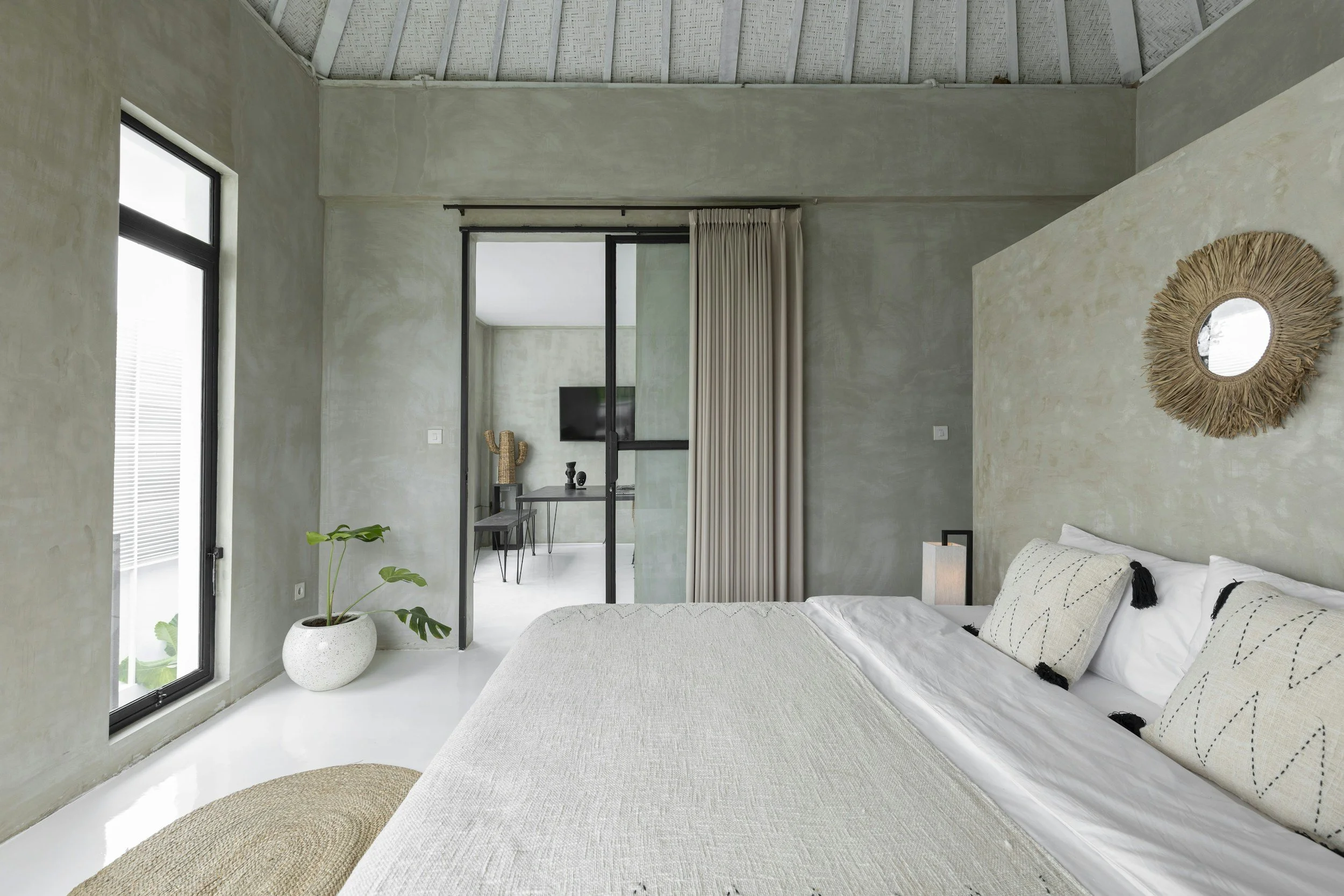
As textured interiors continue to shape the design world in 2026, two finishes in particular continue to dominate the conversation: limewash and Roman clay.
At first glance, they can appear somewhat similar. Both offer softness, movement, and a departure from traditional flat paint. Both create a more elevated, architectural atmosphere within a home. And both have become increasingly popular among homeowners and designers looking for interiors that feel layered rather than overly polished.
But despite their similarities, limewash and Roman clay create two very different experiences within a space.
Understanding the difference between them is often less about which one is “better” and more about understanding the feeling you want a room to have.
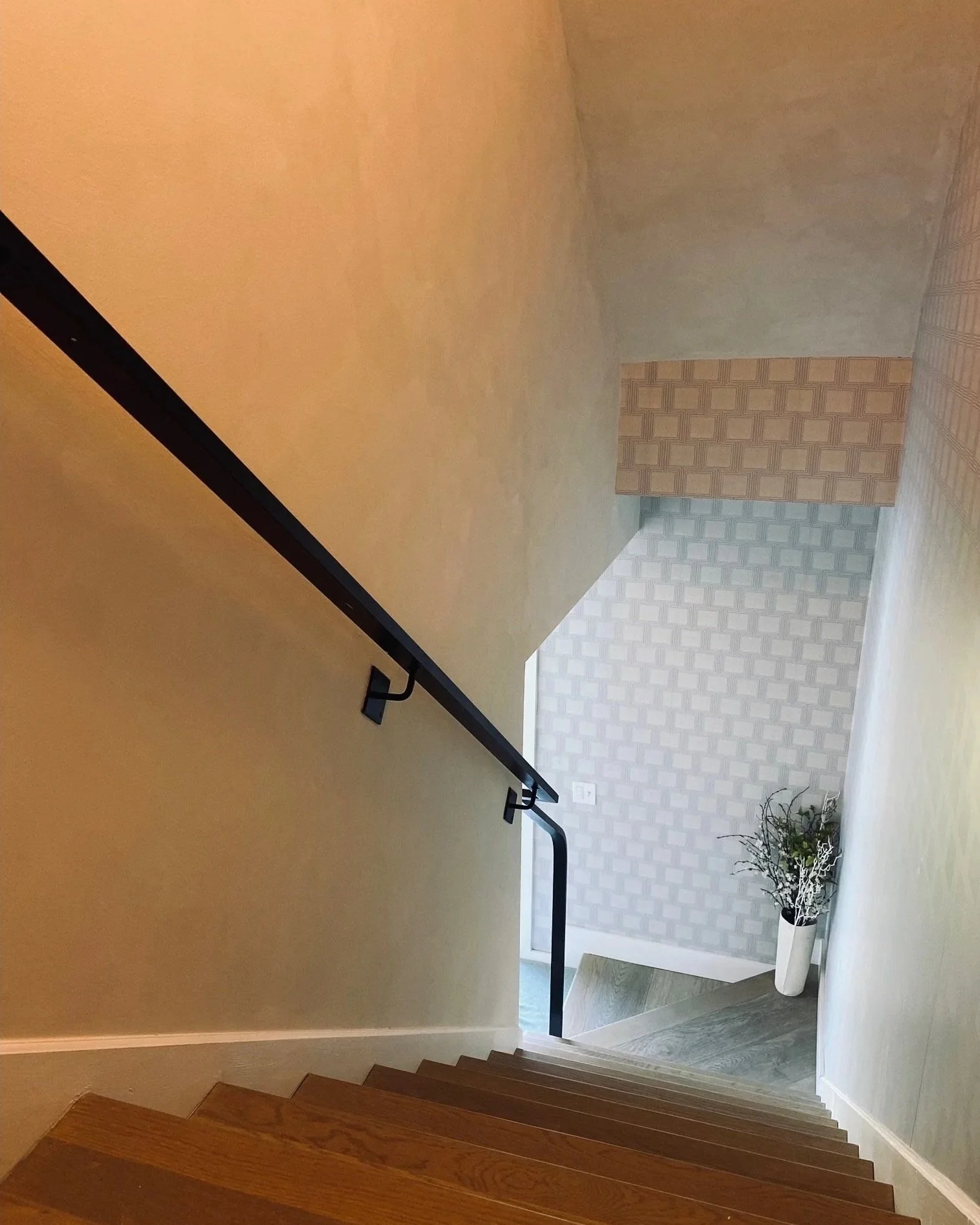
The best finish for a space is usually the one that supports the architecture quietly rather than competing with it.
Limewash has a distinctly organic quality to it. The finish tends to feel breathable, natural, and slightly weathered in the best possible way. There’s an old-world softness to limewash that gives walls movement without making them feel overly dramatic.
One of the reasons limewash has become so popular is because of the way it interacts with light. Depending on the time of day, the surface can appear softer, moodier, warmer, or more dimensional. It brings a level of subtle variation that traditional paint simply cannot replicate.
In many homes, limewash works especially well in bedrooms, living rooms, entryways, and spaces where a calm, relaxed atmosphere is the priority. It pairs naturally with warm woods, natural stone, linen fabrics, aged brass, and other organic materials commonly seen in modern European-inspired interiors.
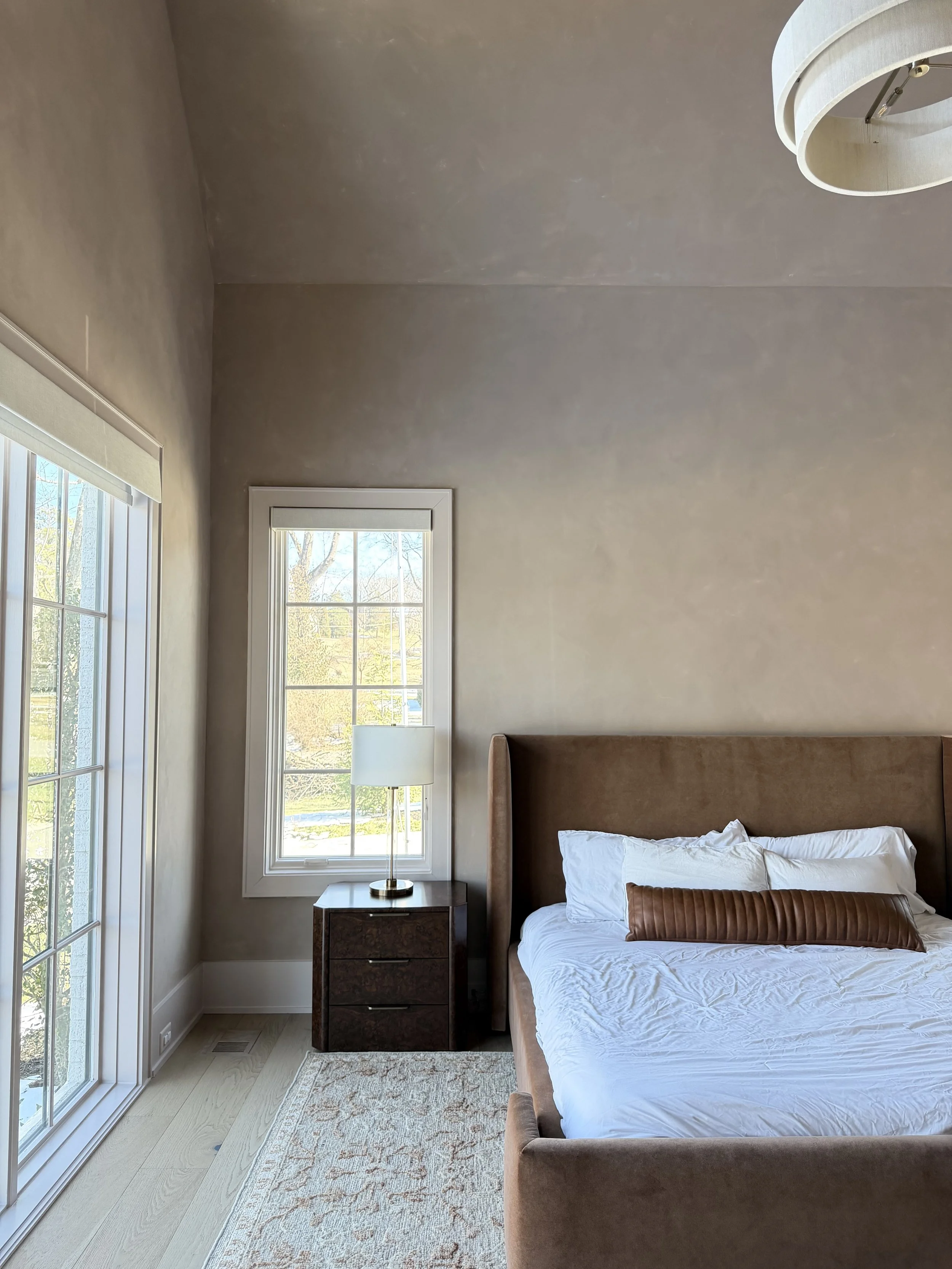
Limewash
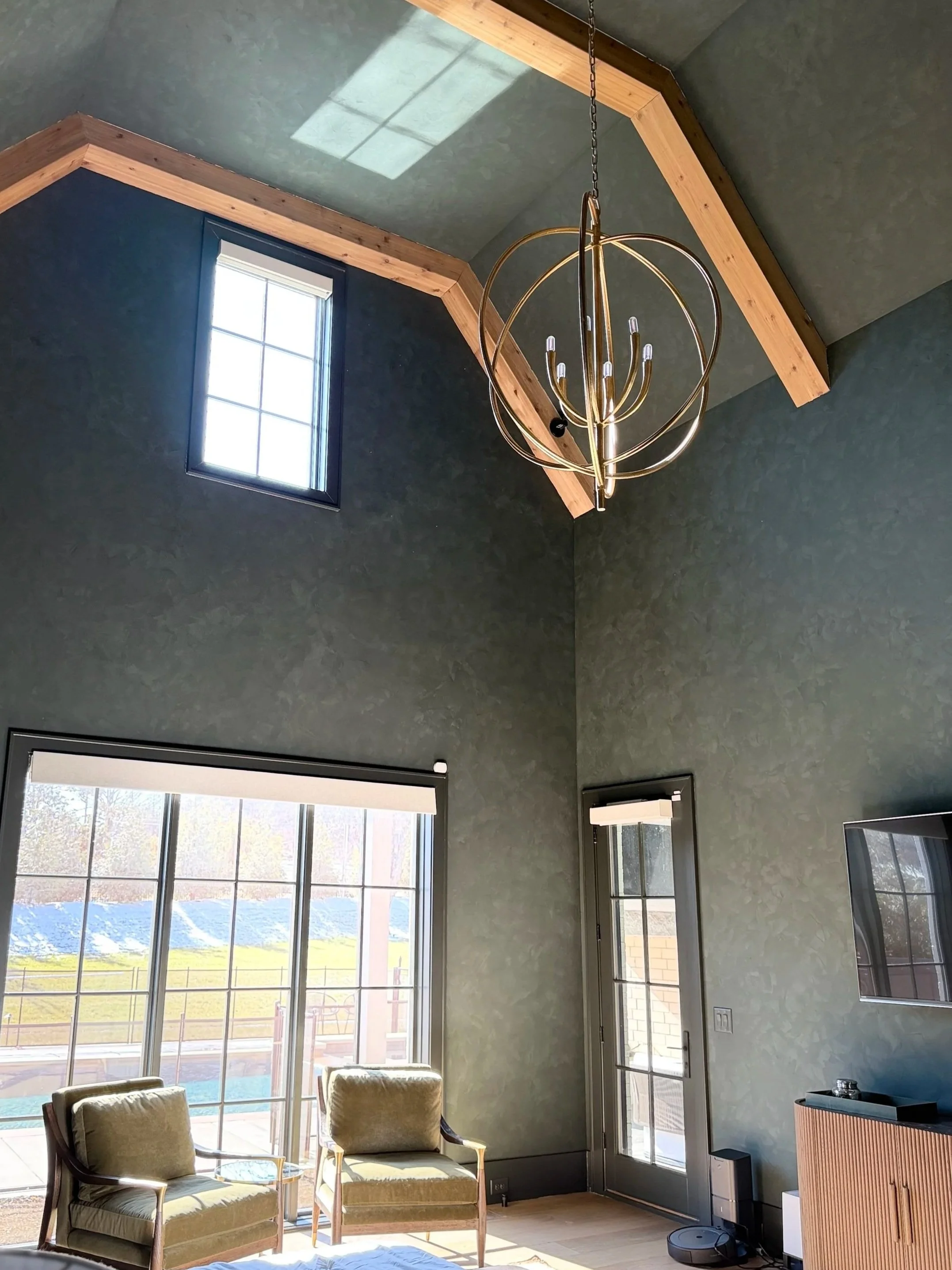
Roman Clay
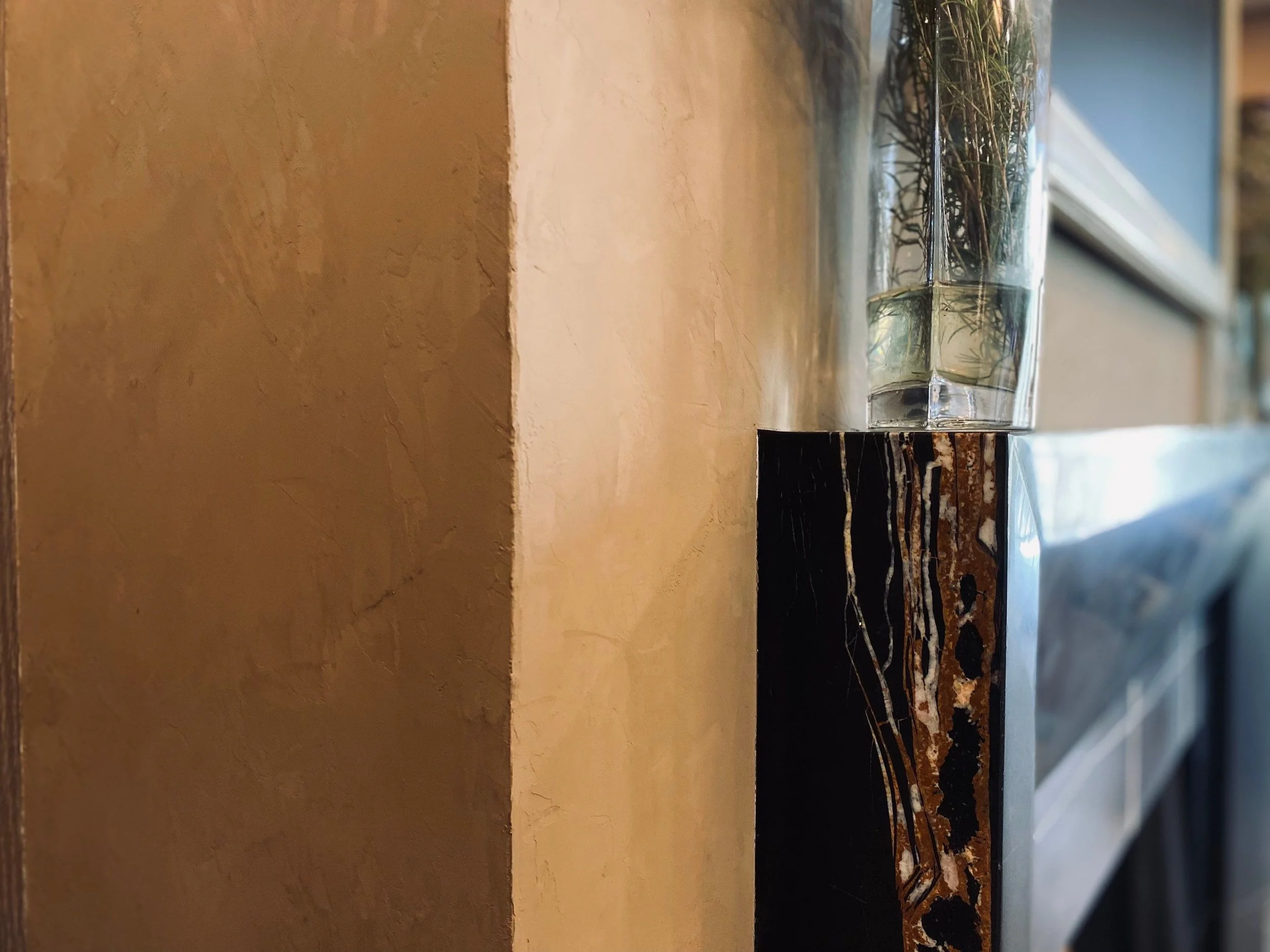
Roman clay, on the other hand, tends to feel more refined and architectural. While still soft and matte in appearance, it carries a more sculptural look than limewash. The movement is more controlled, and the finish often feels slightly more contemporary.
Where limewash feels airy and organic, Roman clay tends to feel grounded and intentional.
Roman clay is particularly effective in spaces where homeowners want warmth and depth without the rustic character that limewash can sometimes introduce. We often see it used beautifully in dining rooms, studies, powder baths, and feature walls where a more tailored atmosphere is desired.
Our Perspective
Neither approach is right or wrong — they simply create different moods.
Something to consider is the surrounding lighting conditions of your space, which can dramatically influence the way these finishes appear and feel. Natural light tends to amplify the softness and tonal shifts within limewash, while Roman clay often responds beautifully to directional lighting and layered interior lighting schemes.
It’s also important to remember that texture is often most effective when used selectively. A single accent wall or thoughtfully curated space can sometimes create more impact than applying the finish throughout an entire home.
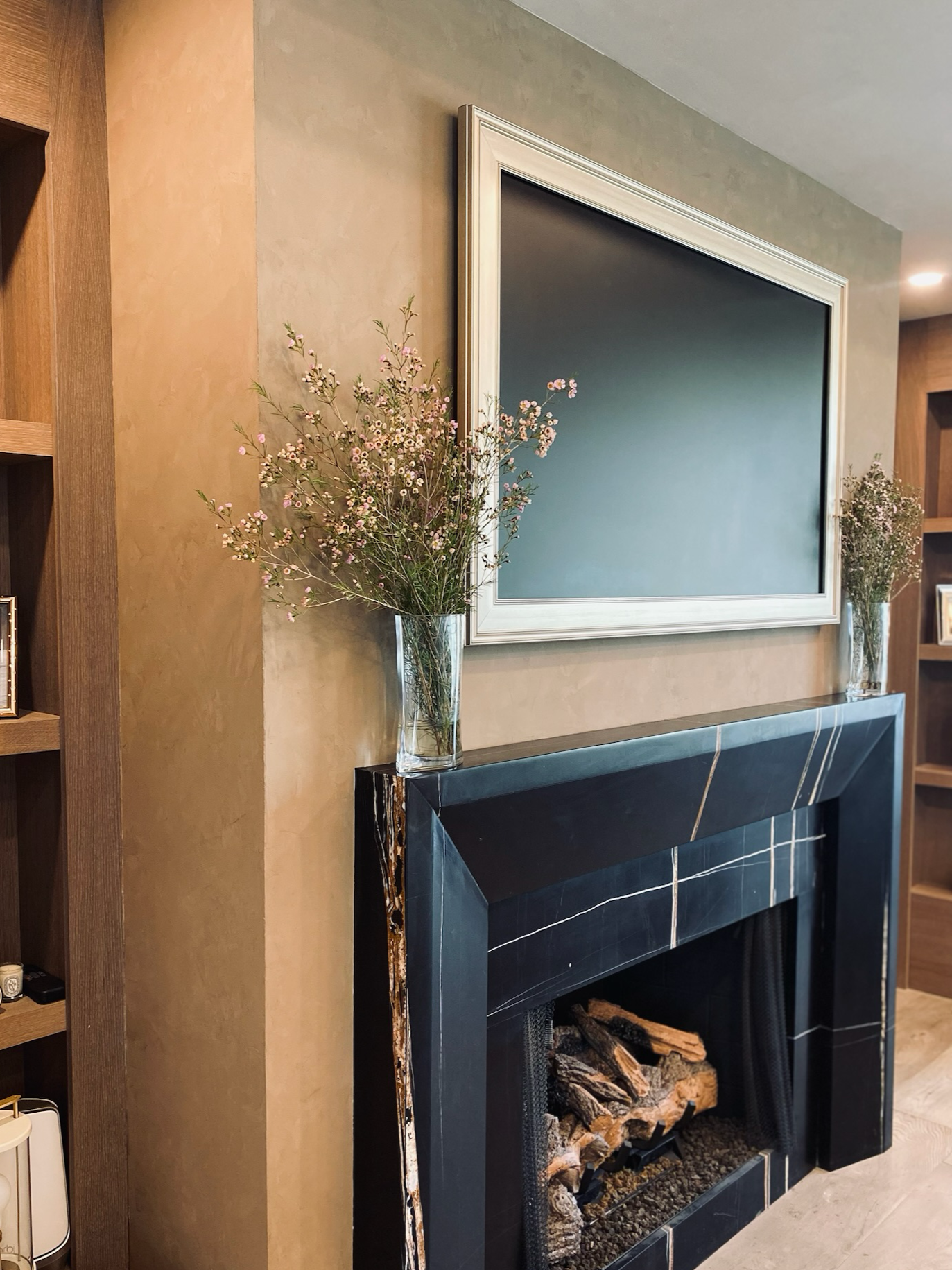
A thoughtfully placed feature wall or a softly textured area can sometimes create more impact than a broader whole-home application.
For homeowners trying to decide between the two, we usually encourage them to think less about trend and more about atmosphere.
Do you want the room to feel soft, airy, and organic?
Or grounded, tailored, and architectural?
That answer often points naturally toward the right finish.
As textured interiors continue to evolve, we expect both limewash and Roman clay to remain staples within high-end homes — not simply because they’re trending, but because they bring warmth, depth, and material character back into interiors in a way flat paint often cannot.
And ultimately, that’s what great design tends to come back to: creating homes that feel layered, intentional, and timeless rather than temporary.